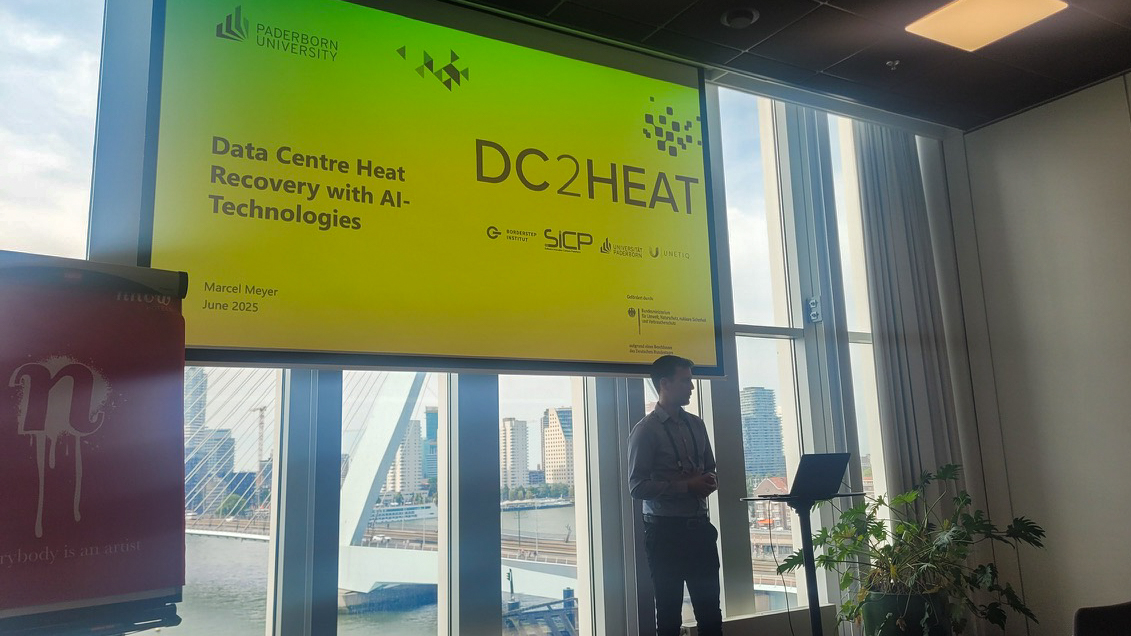
Marcel Meyer, research assistant in the Department of Information Systems, in particular Data Analytics at Paderborn University, was a guest at the 13th International Workshop on Energy Efficient Data Centres (E2DC 2025) as part of the e-energy 2025 conference in Rotterdam on 17 June . In his presentation, he introduced the research project DC2HEAT - Data Centre Heat Recovery with AI-Technologies and presented approaches on how artificial intelligence (AI) can contribute to the more efficient use of waste heat in data centres.
The DC2HEAT project is researching AI-based methods to enable the intelligent use of waste heat from data centres as an energy source in order to avoid fossil fuels and promote climate-friendly operation. The focus is on the development of an intelligent digital twin, with which the overall system can be dynamically adapted to changing conditions.
Two key technological approaches were presented in more detail at the workshop:
- Causal Machine Learning (Causal ML): This approach enables robust predictions even in the event of interventions in the system or changed framework conditions by recognising causal relationships, for example to simulate how certain control measures would affect the heat flow.
- Time Series Foundation Models: These are large, pre-trained models for time series data that enable efficient and scalable forecasting of heat demand in households and neighbourhoods.
In addition to exciting presentations and discussions, the workshop also offered plenty of opportunities to exchange ideas with other researchers and experts.
"My key takeaway from the presentations, talks and discussions: The sustainable design of data centres is long overdue. In light of the rapid growth rates of data centres and the AI boom, concrete, scalable solutions are needed now. It also became clear from the discussions with European researchers that Europe needs to develop its own sovereign solutions," summarises Marcel Meyer.
Find out more about the project: https://dc2heat.de