Digital Mobility Transfer Centre
The Transfer Centre brings together research findings, digital tools and scientific consultancy services from the Software Innovation Lab at Paderborn University. It supports local authorities and transport operators in analysing today’s mobility systems using data-driven approaches, planning on-demand services and implementing digital mobility solutions in a sustainable manner.
Overview


Transfer Centre
Aims and Vision
The Transfer Centre for Digital Mobility bridges the gap between research and practice. Our vision is to make research findings, methods and digital tools available to local authorities, transport operators and other stakeholders to help transform mobility systems.
We provide support in analysing mobility systems using data, evaluating developments and making informed decisions on the design of future mobility services.
Who is the Transfer Centre intended for?


Transfer offers
Shaping mobility together
Our transfer initiatives provide an accessible entry point for dialogue between research and practice. Together, we identify challenges, discuss possible courses of action and develop approaches for specific transfer and implementation projects.
Workshop programmes
Herausforderungen der digitalen Mobilitätsstransformation erkennen
- Die digitale Transformation von Mobilitätssystemen eröffnet neue Möglichkeiten für flexible, datenbasierte und nutzerorientierte Angebote. Gleichzeitig entstehen neue Herausforderungen: von Datenverfügbarkeit und Schnittstellen über organisatorische Prozesse bis. Hin zu Finanzierung, Akzeptanz und Verstetigung.
- Unser Einstiegsworkshop unterstützt Kommunen, Verkehrsunternehmen und andere Mobilitätsakteure dabei, diese Herausforderungen systematisch zu erfassen und erste Handlungsoptionen zu entwickeln. Ohne technische Vorkenntnisse erarbeiten die Teilnehmenden gemeinsam eine Standortbestimmung, priorisieren zentrale Themen und leiten konkrete nächste Schritte ab.
Geeignet für: Kommunen, Verkehrsunternehmen und weitere Mobilitätsakteure
Dauer: 3 bis 4 Stunden
Ergebnis: Herausforderungskarte, Priorisierung und nächste Schritte
Ziel: Orientierung schaffen und den Einstieg in konkrete Transferprojekte ermöglichen
Kontakt
Flotten und Betrieb gemeinsam optimieren
- Die Planung von On-Demand-Systemen erfordert ein Zusammenspiel aus strategischen und operativen Entscheidungen. Flottengröße, Fahrzeugtypen, Hub-Standorte, Ladeprozesse, Dispositionslogiken und Ride-Pooling-Regeln beeinflussen unmittelbar, wie zuverlässig wirtschaftlich und nutzerfreundlich ein Angebot werden kann.
- Unser Vertiefungsworkshop unterstützt Kommunen, Verkehrsunternehmen und KMU dabei, Herausforderungen in der integrierten Flotten- und Betriebsplanung systematisch zu erfassen und Optimierungspotenziale sichtbar zu machen. Gemeinsam analysieren wir zentrale Stellgrößen, geeignete KPIs und relevante Datenanforderungen. Daraus entstehen konkrete Ansatzpunkte für Simulationen, Sensitivitätsanalysen oder betriebliche Verbesserungen.
Geeignet für: Kommunen, Verkehrsunternehmen und Mobilitätsdienstleister
Dauer: 4 bis 5 Stunden
Ergebnis: Herausforderungskarte, Optimierungshebel, KPI- und Datencheck, nächste Schritte
Ziel: Engpässe erkennen, Planungsannahmen schärfen und Optimierungspotenziale für On-Demand-Systeme ableiten
Kontakt
Motivation
Challenges facing today’s transport systems
Mobility systems today face a wide range of challenges. In rural and suburban areas in particular, long waiting times, limited flexibility and inefficient utilisation of services on offer often mean that mobility cannot be provided in line with demand. At the same time, the demands of multimodal mobility complicate the planning and operation of integrated transport systems. Added to this are increasing demands for sustainability, cost-effectiveness and an attractive user experience.
What will the mobility of tomorrow look like?
Future mobility systems must be flexible, tailored to demand and intelligently networked. On-demand services, multimodal mobility chains and digital services open up new possibilities for making mobility more efficient and user-centred.
The NeMo.bil research project investigated and developed concepts for flexible, demand-driven and digitally supported mobility. The aim is to create mobility systems that adapt dynamically to users’ needs whilst also being operated in an economically viable and sustainable manner.
But how can we make the transition from a vision of future mobility to successful implementation in practice?
We want to support you in this through our knowledge transfer services!
research
About NeMo.bil
As part of the ‘NeMo.bil’ project, funded by the Federal Ministry for Economic Affairs and Energy (BMWE, formerly BMWK), an innovative, swarm-like mobility system was developed for the sustainable and demand-driven transport of passengers and goods, particularly in rural areas.
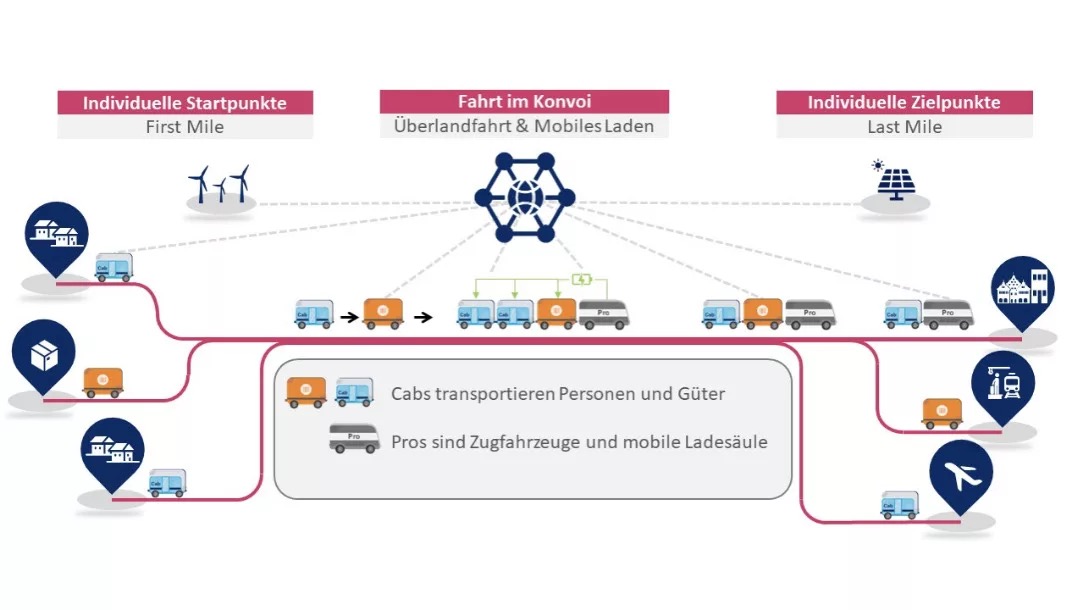
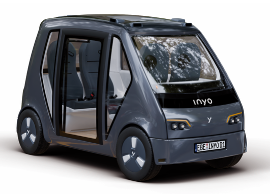
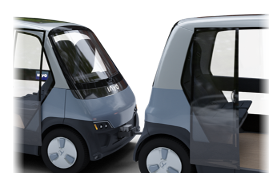
At the heart of the concept are two complementary types of vehicle: the small, electric, autonomous NeMo.Cabs for individual door-to-door journeys, and the larger NeMo.Pros, which act as towing vehicles for shared sections of the route. The intelligent combination of both vehicle types results in a personalised public transport system (iÖV) that combines the advantages of flexible mobility with the efficiency benefits of shared transport.
In addition to the vehicles, the project developed digital methods and tools to support the planning, operation and optimisation of such a mobility system. The following sections provide an insight into the convoy concept as well as the digital approaches to planning and designing the system.
Official NeMo.bil project website
Convoy concept
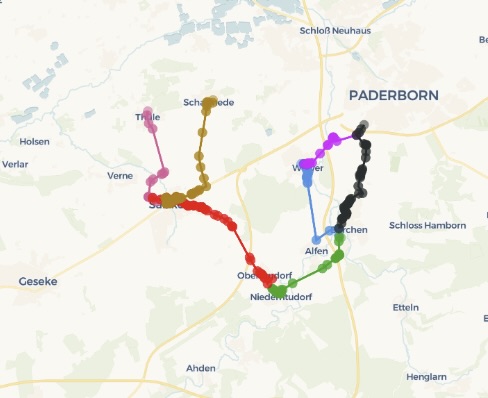
A key feature of NeMo.bil’s mobility concept is the combination of individual mobility with the efficiency benefits of a public transport system.
To achieve this, the autonomous NeMo.Cabs are grouped into a convoy for longer journeys and towed by a NeMo.Pro. This allows individual pick-up and drop-off points to be combined with energy- and resource-efficient travel on high-demand routes.
Demand-responsive mobility in swarms
In order to combine individual mobility with the efficient use of resources, journeys must be coordinated intelligently. The challenge lies in linking individual starting points and destinations via shared sections of the route without restricting flexibility for users.
The NeMo.bil project investigated various concepts for bundling journeys on a demand-responsive basis whilst enabling short journey times and efficient operations. A route- and timetable-based convoy system was examined as the fundamental concept. On high-demand routes, so-called convoy routes are established, which are served by Pro vehicles according to a timetable. At dedicated coupling points along these routes, up to five Cabs can couple to a Pro and uncouple again once the convoy journey is complete.
How a taxi journey in a convoy works

The convoy concept demonstrates how private and public transport can be integrated in the future. At the same time, it highlights that innovative transport solutions can only be successfully implemented if planning, simulation and operation are supported by digital tools.
Planning and design of the transport system
Planning future mobility systems involves numerous strategic and operational decisions. This is particularly true of innovative concepts such as the convoy system developed as part of the NeMo.bil project. Journeys must be coordinated, demand patterns taken into account, and different operational strategies aligned with one another.
How many vehicles are needed? On which routes are convoys viable? Where should mobility hubs be established? And which operating rules lead to short waiting times and cost-effective operation?
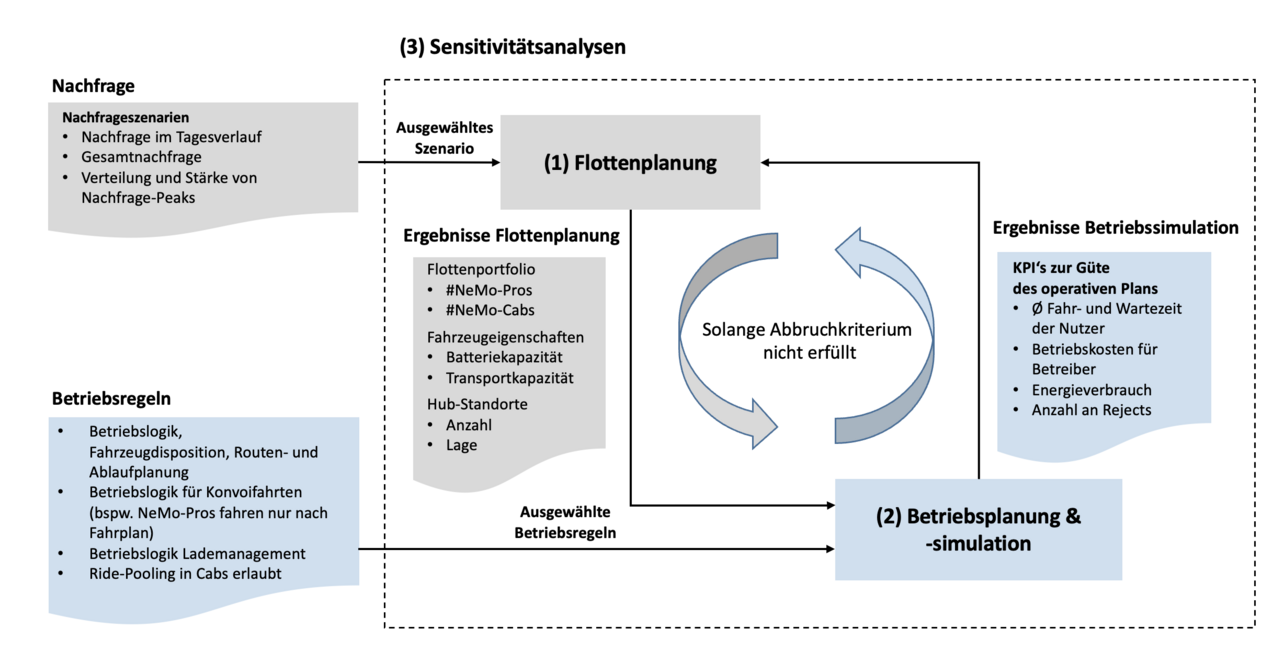
The NeMo.bil project has developed an integrated planning approach for this purpose, combining fleet planning and operational planning. With the aid of digital planning and simulation tools, different scenarios can be examined and their impacts assessed.
The following steps provide an overview of the process.
Grundlage der Planung sind unterschiedliche Nachfrageszenarien. Betrachtet werden unter anderem die Gesamtnachfrage, zeitliche Schwankungen im Tagesverlauf sowie regionale Nachfrage-Schwerpunkte.
Auf Basis der Nachfrage wird festgelegt, wie das Mobilitätssystem grundsätzlich aufgebaut sein soll. Dazu gehören die Anzahl und Eigenschaften der Fahrzeuge sowie die Standorte von Mobilitätshubs und Ladeinfrastruktur.
Anschließend wird untersucht, wie sich die geplante Flotte im Betrieb verhalten würde. Dazu werden Fahrten aus dem betrachteten Nachfrageszenario geplant und simuliert und Kennzahlen wie Wartezeiten, Energieverbrauch, Betriebskosten oder die Anzahl nicht bedienter Anfragen berechnet.
Durch die systematische Variation einzelner Parameter von der Batteriegröße eines einzelnen Fahrzeugs bis hin zur Streckenauswahl für mögliche Konvois wird untersucht, welchen Einfluss die Stellgrößen auf Kosten, Servicequalität und Nachhaltigkeit haben und wie sie gewählt werden sollten, um einen effizienten Betrieb zu ermöglichen.