Disrupted supply chains, fluctuating raw material prices and increasing sustainability requirements - the automotive industry is under pressure. How can Catena-X, the open data ecosystem for the automotive industry, help here? In this interview, Roger Faust explains why standardised data exchange can become a game changer for SMEs.
Mr Faust, let's start with a fictitious scenario: let's imagine I'm a medium-sized supplier in the automotive industry. Due to the aftermath of the coronavirus pandemic, the war in Ukraine and the ongoing geopolitical tensions, I am struggling with disrupted supply chains, fluctuating raw material prices and the pressure to produce more sustainably. Why could Catena-X be the solution for me in this situation?
You describe very well the pressure that companies are under in the field of sustainability and which will certainly increase in the future, as not only will customers have to produce more sustainably, but companies themselves will also be forced to do so. Consider the EU regulation "Corporate Sustainability Reporting Directive (CSRD). With Catena-X, it is now possible to standardise and automate the necessary data exchange. It should be obvious to everyone that the product carbon footprint (PCF) of millions of parts that are exchanged daily in the automotive supply chain can no longer be managed using Excel. The problem is exacerbated by the unstable supply chains you mentioned. More flexibility is needed here for rapid adjustments. Catena-X standards can help here, individual supplier portals tend to stand in the way.
Before we go any deeper: What exactly is Catena-X, and what is its vision for the automotive industry as a whole?
Catena-X is the automotive industry's first open, collaborative and decentralised data ecosystem based on uniform standards and common principles. Sponsored by the German Federal Ministry for Economic Affairs and Climate Protection (BMWK), the Catena-X consortium was launched in 2021. The aim of the 28 consortium partners from research and industry was to jointly develop a data-driven value creation network for all players in the German and European automotive industry. The consortium participants included well-known companies such as BMW, Volkswagen, Mercedes Benz, Deutsche Telekom, Robert Bosch, Siemens and many more. However, small and medium-sized companies were also involved in order to create a structure that was as representative as possible of the automotive supply chain and to incorporate their interests.
What happened to the project?
The consortium ended in summer 2024, with a total investment of more than 200 million euros. After the end of the funding project, Catena-X was transformed into an association. The association is responsible for the further development of the project. This is where the standards are developed, operations are organised and partners and solutions are certified. The software modules are developed as part of the Tractus-X open-source initiative. Cofinity-X, a joint venture between BASF, BMW, Henkel, Mercedes, SAP, Schaeffler, Siemens T-Systems and Volkswagen, was founded as the operating organisation.
How does the Catena-X concept help to reduce the concerns of SMEs about data exchange?
A key aspect of Catena-X is data sovereignty. This means that data suppliers retain the rights to their data and only make it available to data users under special conditions of use. They can determine exactly who can use the data, for how long and for what purposes. This is to prevent others, e.g. the well-known hyperscalers, from using their power to market the data centrally, leaving the data provider empty-handed. Furthermore, the data can also be protected against misuse, for example by competitors.
In this way, it is hoped that the concerns of many SMEs about forced data exchange in the industry can be dispelled and a powerful alternative to the centralised databases of hyperscalers can be established.
How did you and Novatec come into contact with Catena-X and what fascinates you personally about this network?
Novatec has a strong connection to automotive engineering, for example in many projects at Mercedes Benz. As Catena-X connects original equipment manufacturers (OEMs) and suppliers, it naturally became our focus. The major companies from both fields have come together here and developed standards together - we see a solid and future-proof platform for digitalisation projects. I've been working on the digital transformation of industrial companies for quite some time now. Unfortunately, progress has been very slow in the past. Many companies find it difficult to develop their own valuable strategy and then put it into practice. They also often lack the foresight and expertise to assess in advance which solutions will prevail on the market, i.e. which investments will be worthwhile. With Catena-X, the major players in the industry have developed standards that are generally recognised. With the OEMs as driving forces, I am certain that these standards will prevail. This means that the investments made here will also pay off in the long term.
To stay with our example of the medium-sized supplier: How can Catena-X help to make supply chains more transparent and recognise potential bottlenecks at an early stage?
Catena-X is based on various use cases that address specific issues in the automotive supply chain. Demand and capacity management, for example, is one of these use cases. This enables customers' requirements to be compared with suppliers' capacities in a standardised way, allowing bottlenecks to be identified at an early stage. The advantage for suppliers is that, with the Catena-X standard, they will have a solution for all OEMs in future and will no longer have to introduce and maintain individual processes for each supplier portal. If you think about it further, this applies not only to companies' customers, but also to communication with their suppliers. This means that Catena-X will rush through the supply chain like a tsunami. It will take data exchange to a whole new level and processes will be standardised and automated in the long term, making them faster and cheaper. Although this will take a while, it will ultimately prevail.
If you would like to delve deeper into the topic, listen to the "DiSerHub Connections" podcast, which was created as part of our DiSerHub transfer project.
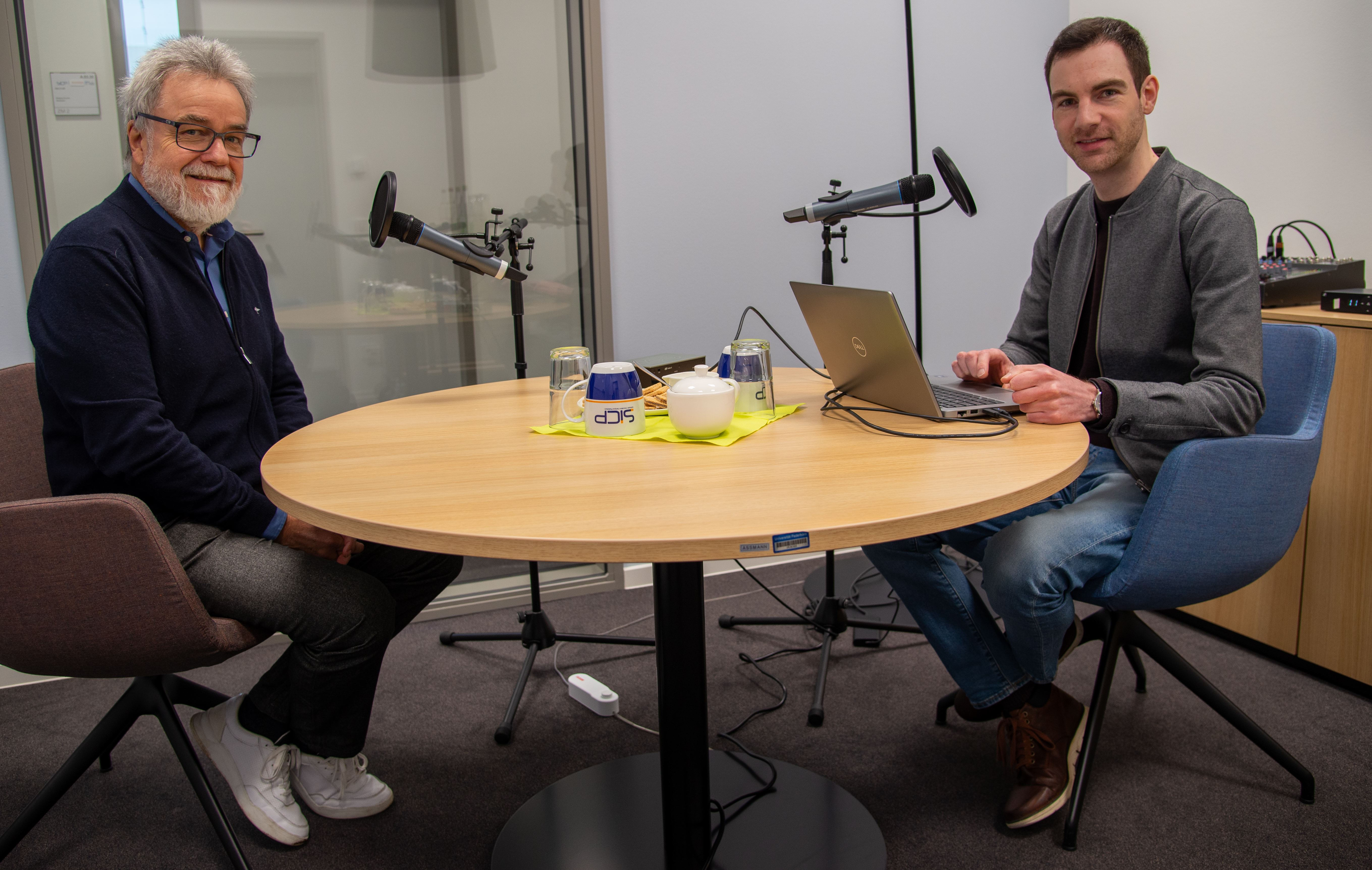
Christopher Lükefrom theHeinz Nixdorf Institutetalks in a recent episode withRoger Faustabout Catena-X, the collaborative and open data ecosystem for the automotive industry.
In the podcast, the expert answers further questions such as these:
- What new business models are emerging as a result of Catena-X?
- What is the entry point for SMEs?
- As an SME, do I need to have in-depth technical expertise to be able to use Catena-X, or are there simple ways to integrate?
- How can Catena-X ensure your own competitiveness in the future?
Listen in now and take away some exciting ideas:https://diserhub-connections-podcast.podigee.io/13-new-episode
About the expert: Roger Faust works at Novatec Consulting - a custom software development company - as a consultant in the field of new business development. He advises companies on all aspects of digital transformation, in particular on organisational issues, employee motivation and the development of new business models. In the field of Catena-X, Roger Faust advises customers on identifying the benefits for their own company, selecting suitable use cases, optimising internal data management and using the Catena-X ecosystem.